Case Study2015-2018 • iOS, Android
Loot Crate
Lead Product Designer and Product Manager
The Brief
Designing a community-driven commerce experience for geeks and gamers.
Context
Loot Crate’s audience of geeks and gamers were deeply passionate about their fandoms, but they lacked a dedicated space to connect with one another inside the Loot Crate ecosystem. Community engagement primarily lived on external platforms like Facebook groups, fragmenting the experience and limiting Loot Crate’s ability to create meaningful, ongoing relationships with its customers. At the same time, Loot Crate was undergoing a rebranding effort, with a growing and increasingly complex product catalog.
Core Challenges
Key obstacles that required strategic design thinking to overcome.
01
Community Without Fragmentation — Users wanted to connect around shared interests without leaving the Loot Crate ecosystem
02
Product Clarity During Rebrand — The expanding crate catalog needed a clear value proposition for each offering
03
Information Overload — Balancing content, conversation, and commerce without overwhelming users
04
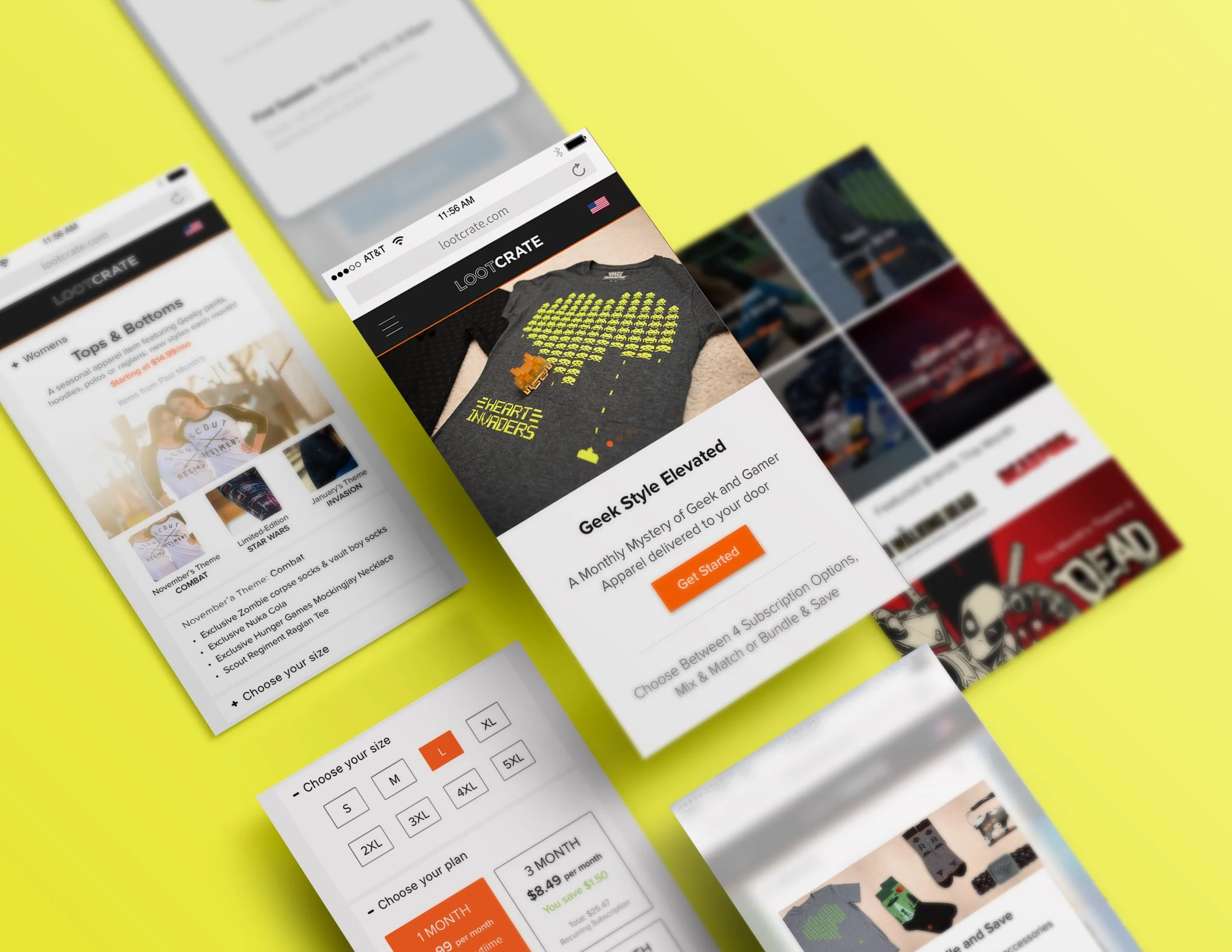
Web-to-Mobile Translation — Determining which web features enhanced mobile and which introduced friction
Goal
Design a mobile-first experience that allows Loot Crate’s community to connect, express fandom, and discover products in one cohesive platform. Success meant increased engagement, clearer product discovery, and higher conversion without sacrificing usability or clarity.
Users
Primary users were Loot Crate subscribers and fans of gaming, sci-fi, comics, and pop culture. These users were highly expressive, community-driven, and motivated by discovery and exclusivity, but had low tolerance for cluttered interfaces or unclear product value.
Key Insight
Fandom is social by nature. If community and commerce are designed together, discovery becomes engagement, not interruption.
Solution Overview
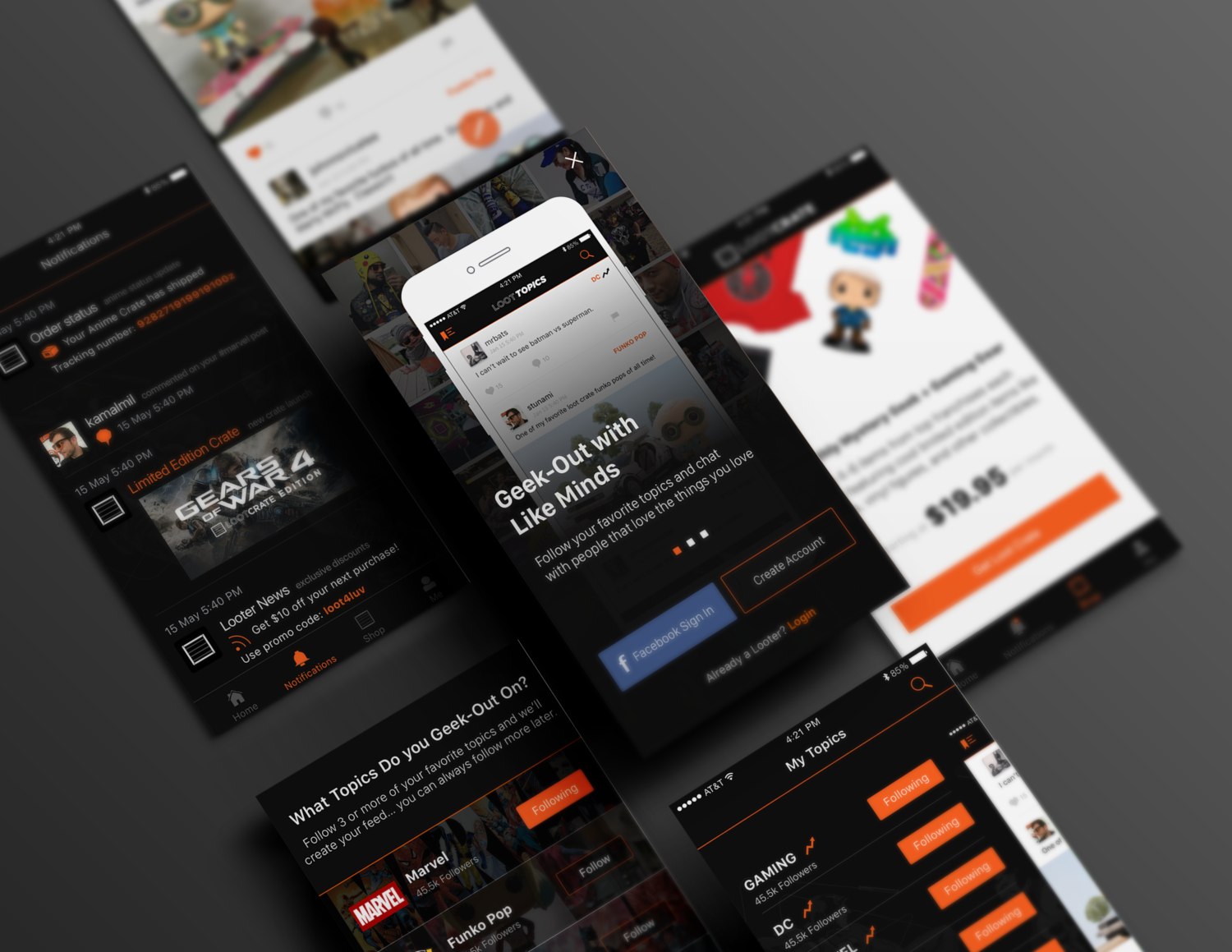
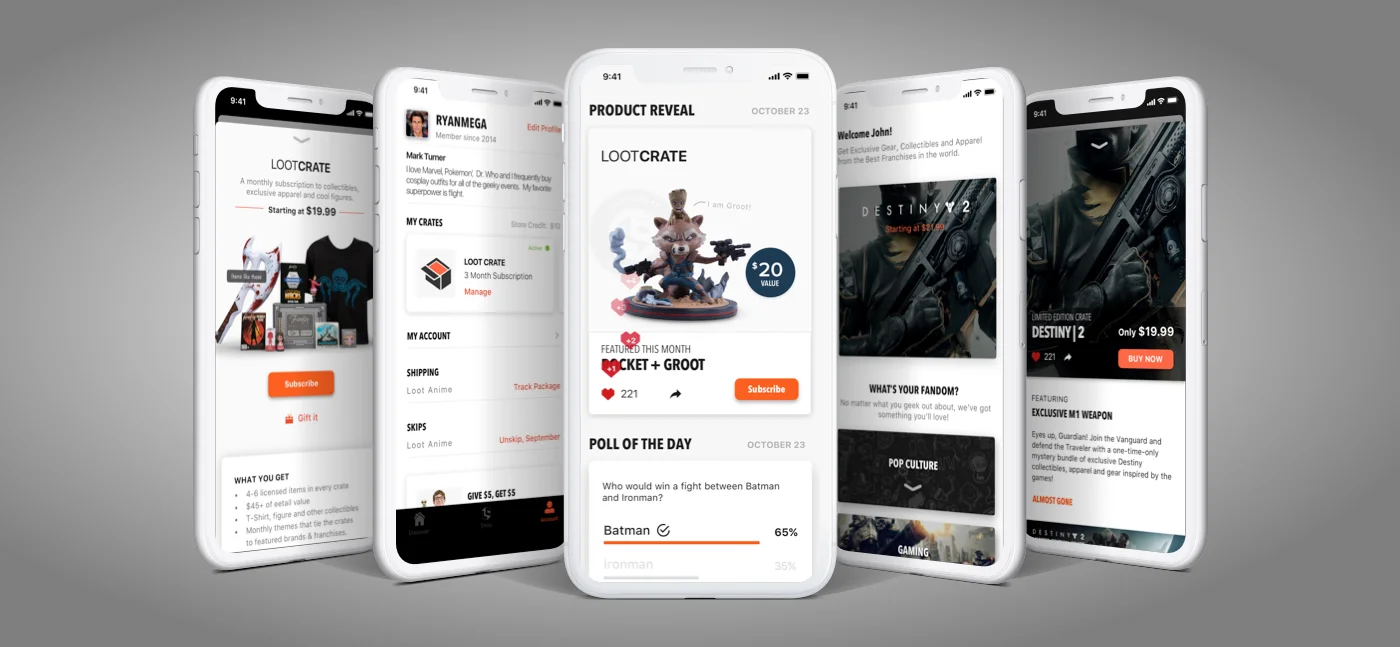
The Loot Crate iOS app was designed as a community-first commerce platform. It combined a structured product catalog with social features that allowed users to gather around topics, comment, and engage with content tied directly to their fandoms. Rather than replicating the website, the app focused on clarity, conversation, and momentum.
Design Principles
Community drives retention. Clarity beats completeness. Content should guide, not distract. Mobile-first means removing friction, not shrinking the web.
Challenges and Tradeoffs
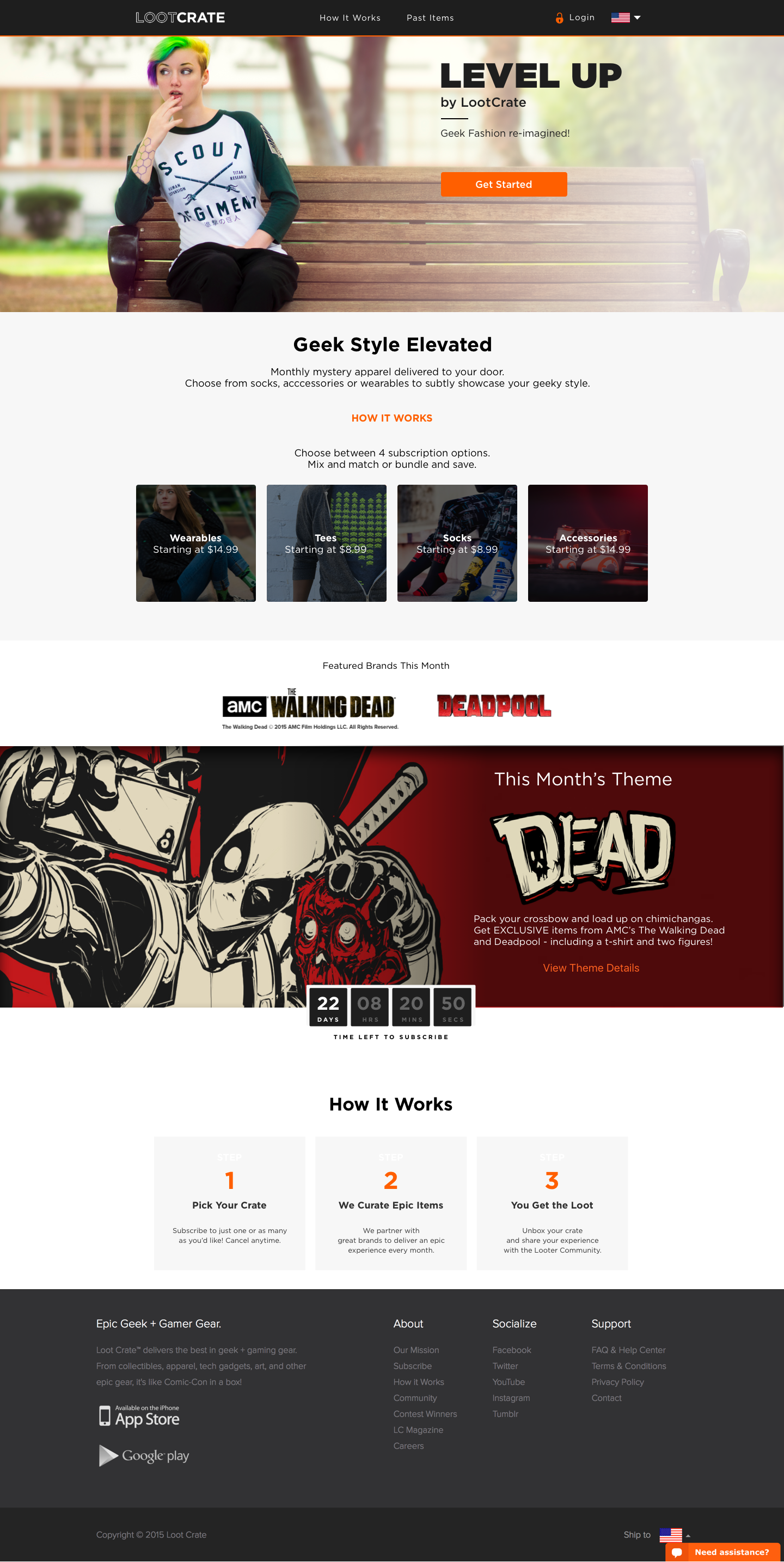
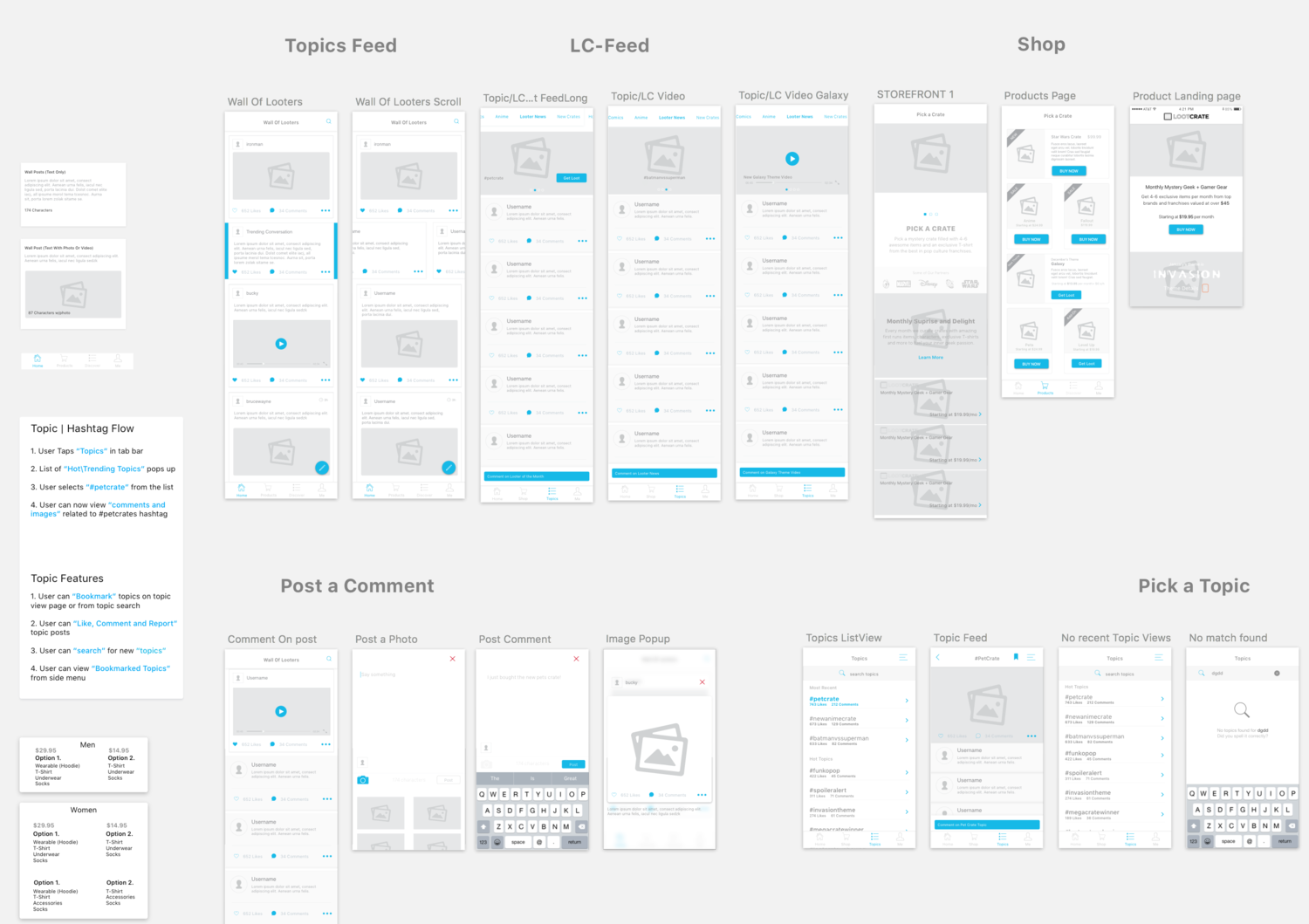
Structuring Content During Rebrand: Products were reclassified by fandom to create a clearer digital catalog and reduce cognitive load. Balancing Social and Commerce: Core MVP features were prioritized to support conversation and purchasing without overbuilding social mechanics.
Core Experience
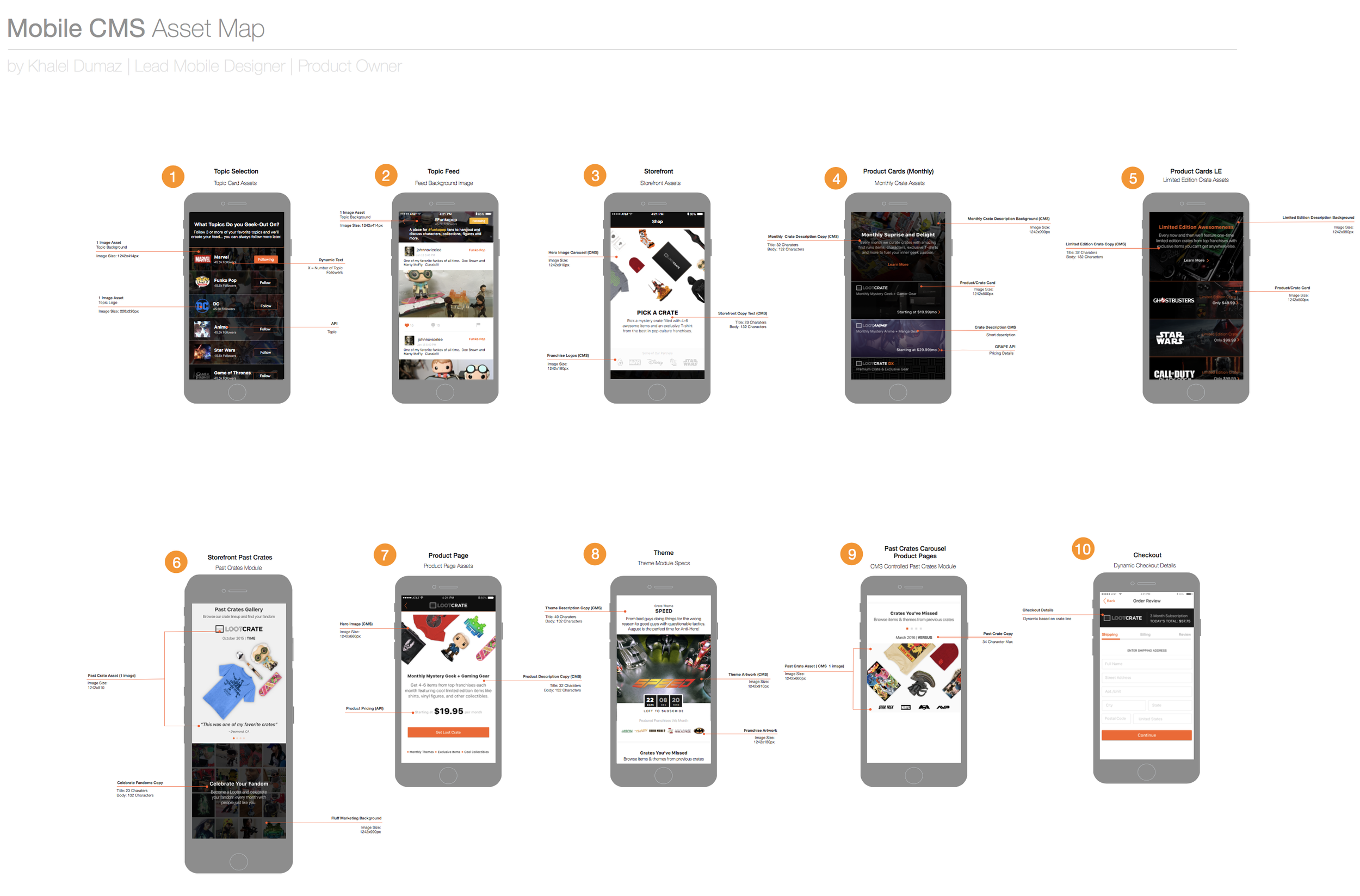
1. Entry and Discovery: Users enter through fandom-driven content rather than a traditional storefront. 2. Topics and Content Feed: Users browse and engage with topics tied to specific fandoms. 3. Community Interaction: Commenting and discussion reinforce engagement. 4. Product Exploration: Crates surfaced contextually with clear value propositions. 5. Purchase: A streamlined buying experience reduces friction.
Outcome
Within the first month of launch, the Loot Crate iOS app became the preferred platform for mobile users. Web daily active users declined as customers migrated to the app. The app achieved a 12.3 percent conversion rate from storefront to checkout and reached over 500,000 monthly active users within the first 27 days.
Reflection
For brands built on passion and identity, community is not a feature. It is the product. This project shows how aligning social interaction with commerce can drive engagement, loyalty, and measurable business impact when designed with clarity and restraint.
UX Artifacts
Experience it live