Case Study2023–2024 • iOS, Web
Fanatics Live
Lead Product Designer
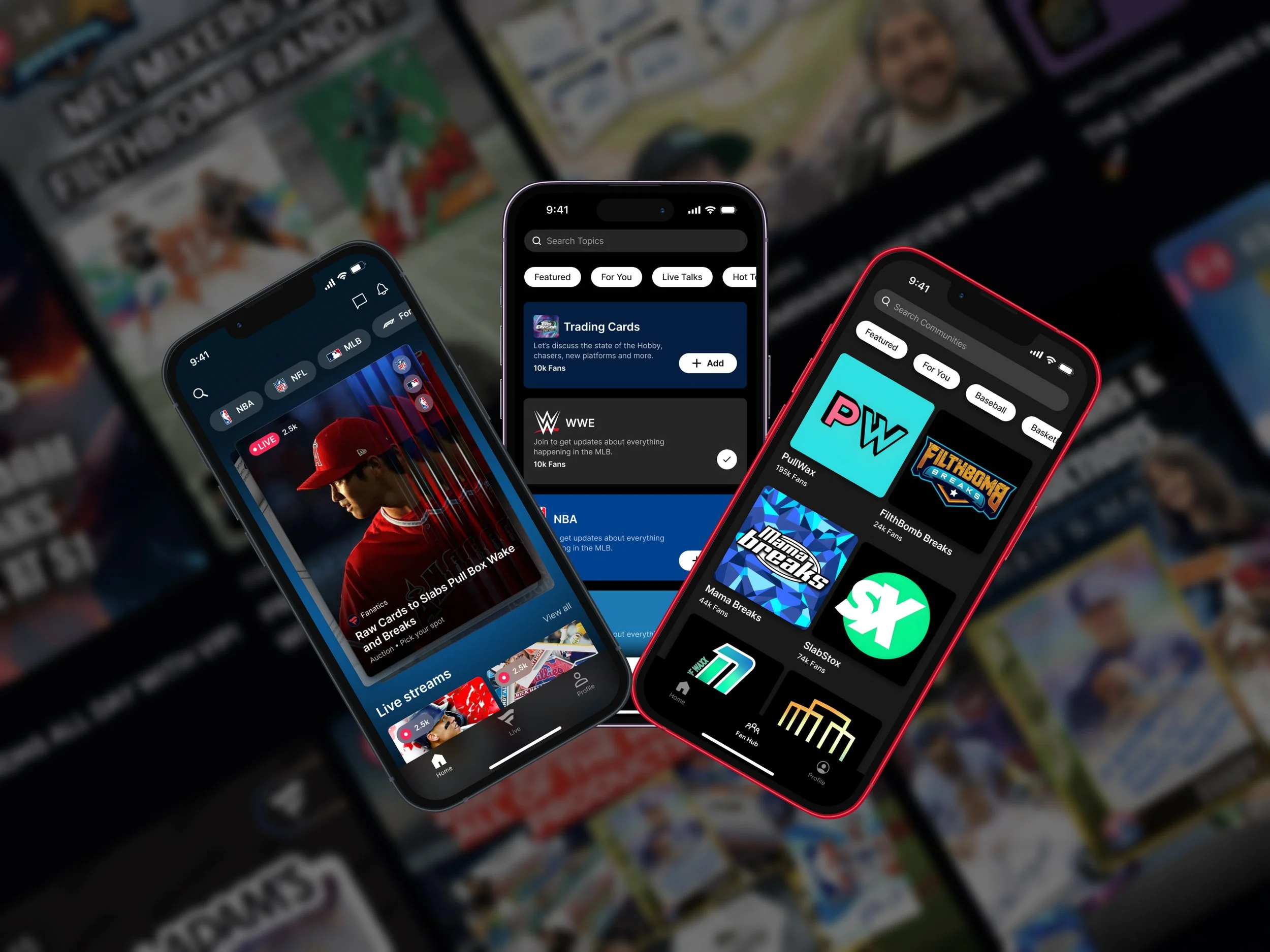
The Brief
Live Commerce for Collectors and Card Breakers. Designing clarity, speed, and trust in real-time sports collectibles.
Context
Following Fanatics’ acquisition of Topps, the company had a rare opportunity to lead the sports memorabilia and trading card market. While demand for live card breaking and auctions was accelerating, Fanatics lacked a dedicated mobile experience to serve collectors and support sellers running live shows. When I joined Fanatics Live, the product vision was still forming. There was no established design process, limited market understanding, and a tight timeline to ship a credible iOS experience that could support live auctions at scale. This created immediate tension: massive market opportunity, minimal structure, and extreme time pressure.
Core Challenges
Key obstacles that required strategic design thinking to overcome.
01
Rapid Market Learning — Card collecting and live breaking is a niche, high-context ecosystem unfamiliar to the team
02
Speed Without Sacrificing Quality — Five critical features needed to be designed and delivered in five weeks
03
Cross-Time-Zone Execution — Engineering teams were distributed across Amsterdam and China, requiring tight alignment and clarity
04
No Formal Research Infrastructure — User testing and validation had to be scrappy and improvised
05
Building Structure from Zero — There was no clear product vision or design process in place
Goal
Design and ship the initial Fanatics Live iOS experience that enables collectors to discover live auctions quickly and allows sellers to run high-confidence live card breaks. Success meant fast navigation, high engagement with live shows, and a foundation scalable enough to grow into a category-defining platform.
Role
Lead Product Designer responsible for end-to-end UX and UI design, rapid research, feature definition, prototyping, usability testing, and cross-functional alignment. I also stepped into product strategy and prioritization to help define scope under extreme time constraints.
Users
Primary users included sports card collectors seeking rare cards and live auctions, and card breakers who needed simple, reliable tools to run live shows. Both groups valued speed, clarity, and real-time feedback, with little tolerance for friction or unclear interfaces.
Key Insight
In live commerce, speed equals trust. Collectors must find what they want instantly, and sellers must feel in control in real time.
Solution Overview
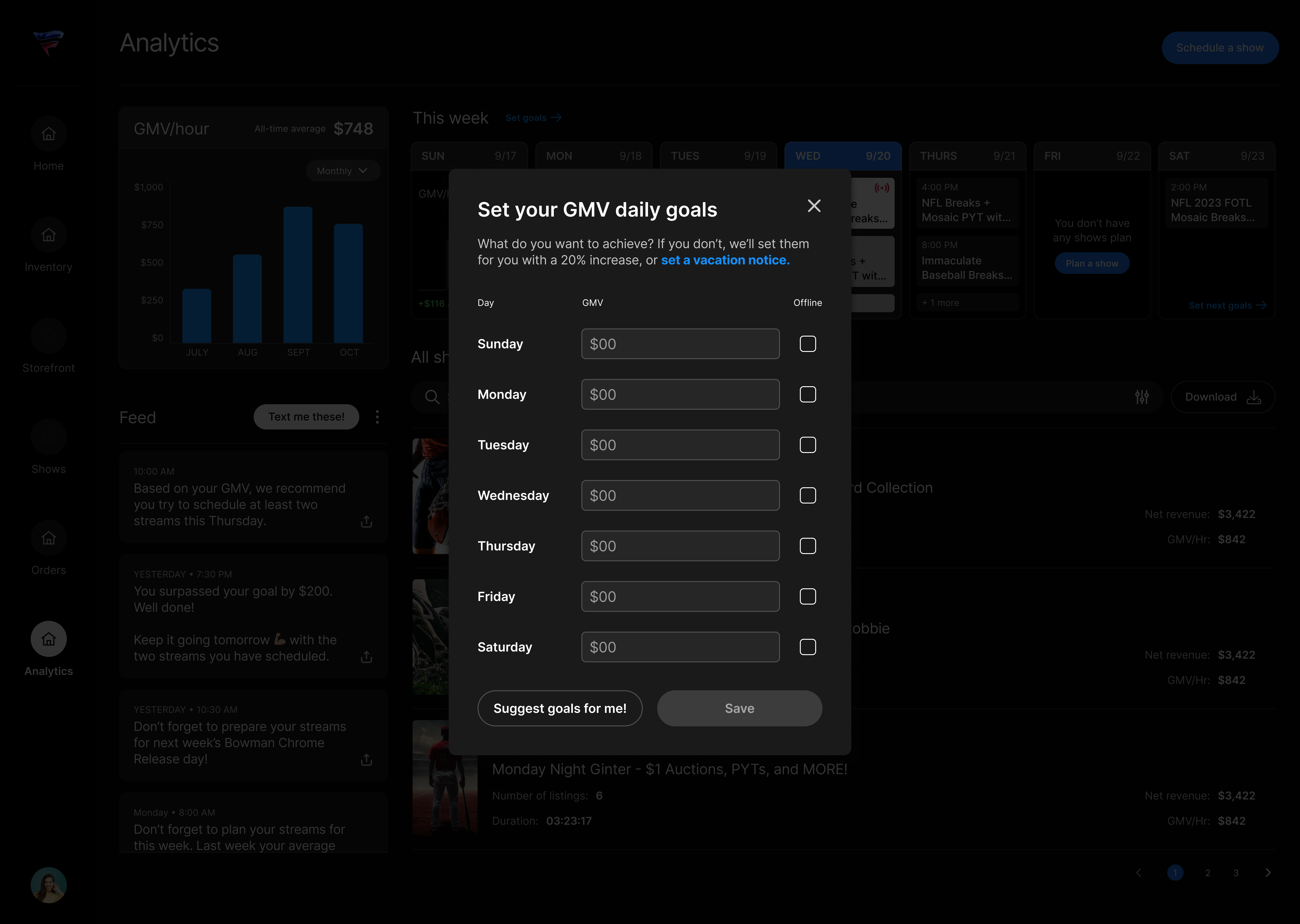
Fanatics Live was designed as a live-first commerce platform focused on discovery, momentum, and clarity. The experience prioritized surfacing relevant live and upcoming shows, minimizing navigation depth, and presenting dense information in a scannable, confidence-driven way. Rather than overbuilding features, the MVP focused on navigation, discovery, show cards, and live auction flows that supported both buyers and sellers.
Design Principles
Speed over novelty. Information density with clarity. Live content must feel trustworthy. Design for intent, not browsing.
Research and Insights
To rapidly understand the market, I analyzed competitor platforms such as Whatnot, studied live auction mechanics, and gathered insights directly from Fanatics’ existing customer base. Insights were synthesized across three lenses: collectors, sellers, and the business.
Collectors
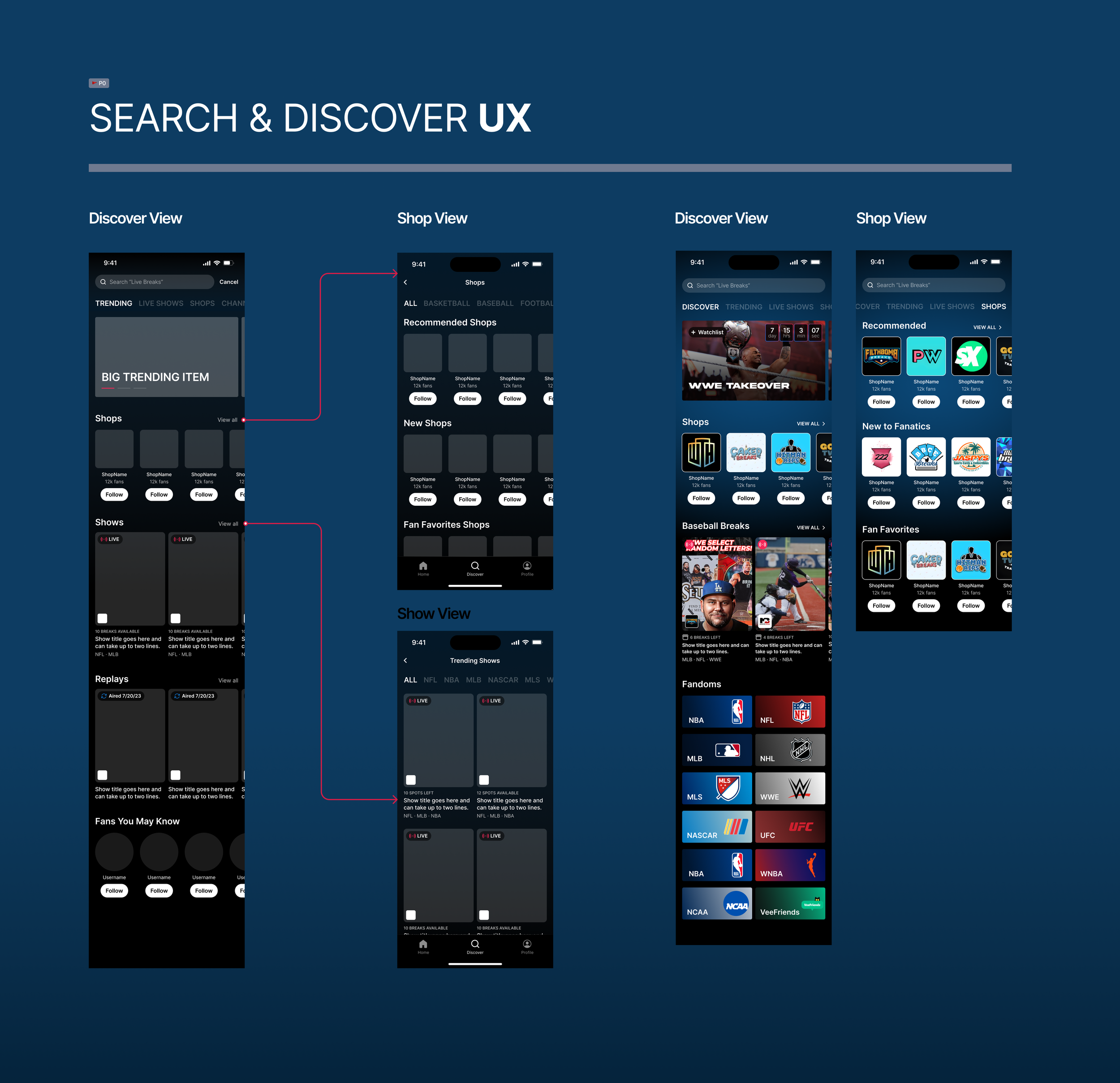
Wanted quick access to rare cards and upcoming shows, personalized discovery, real-time updates, and powerful search.
Sellers
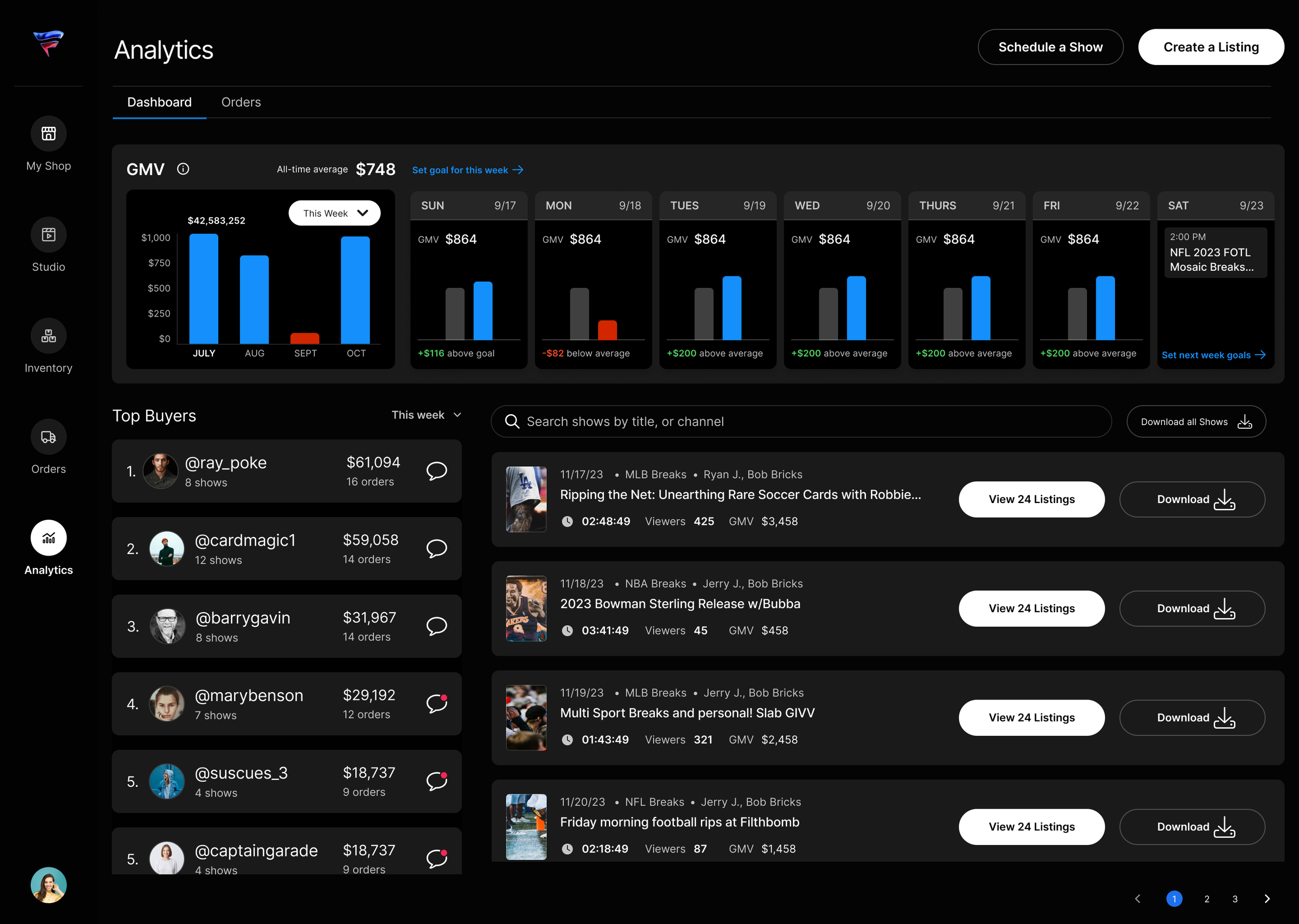
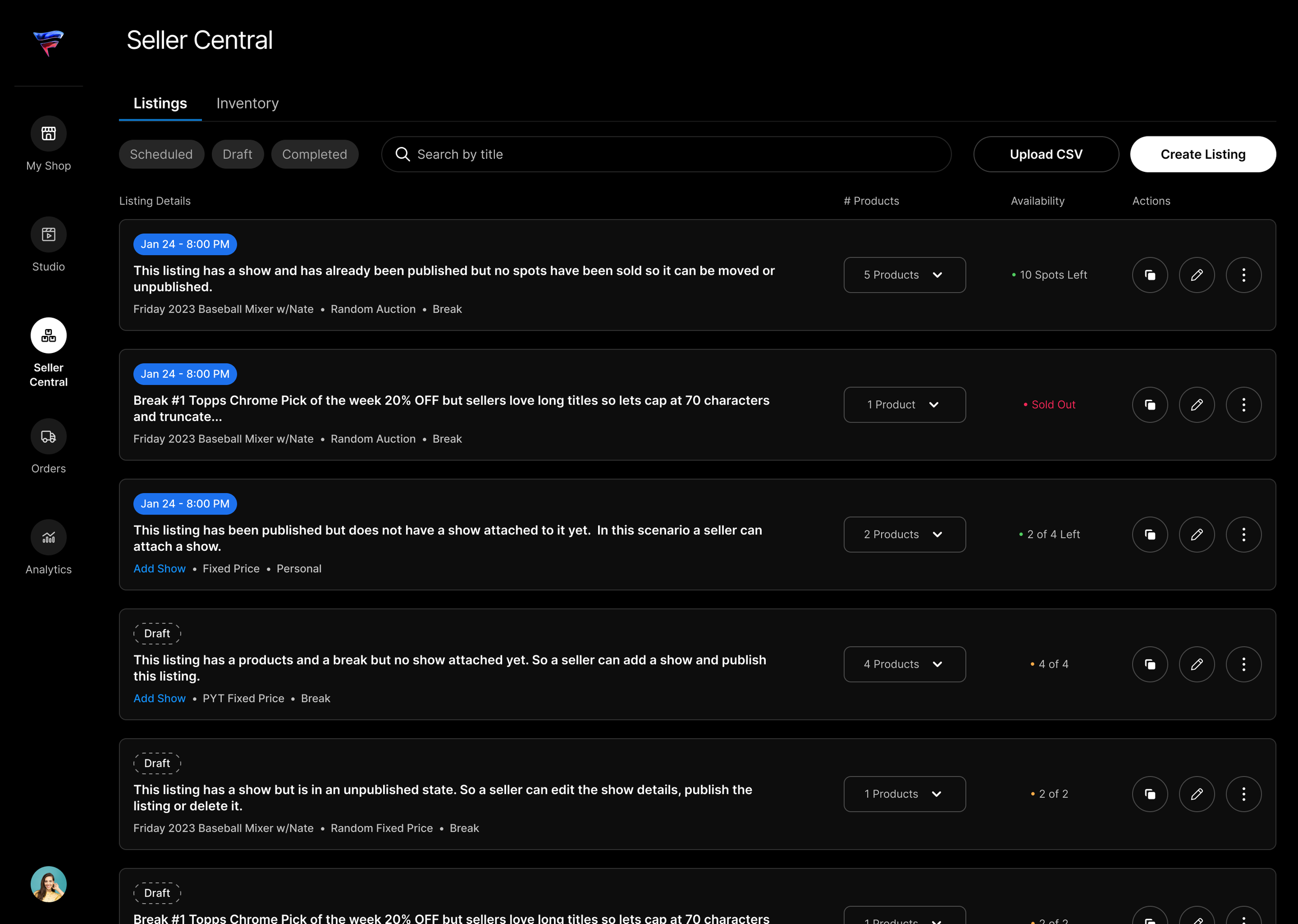
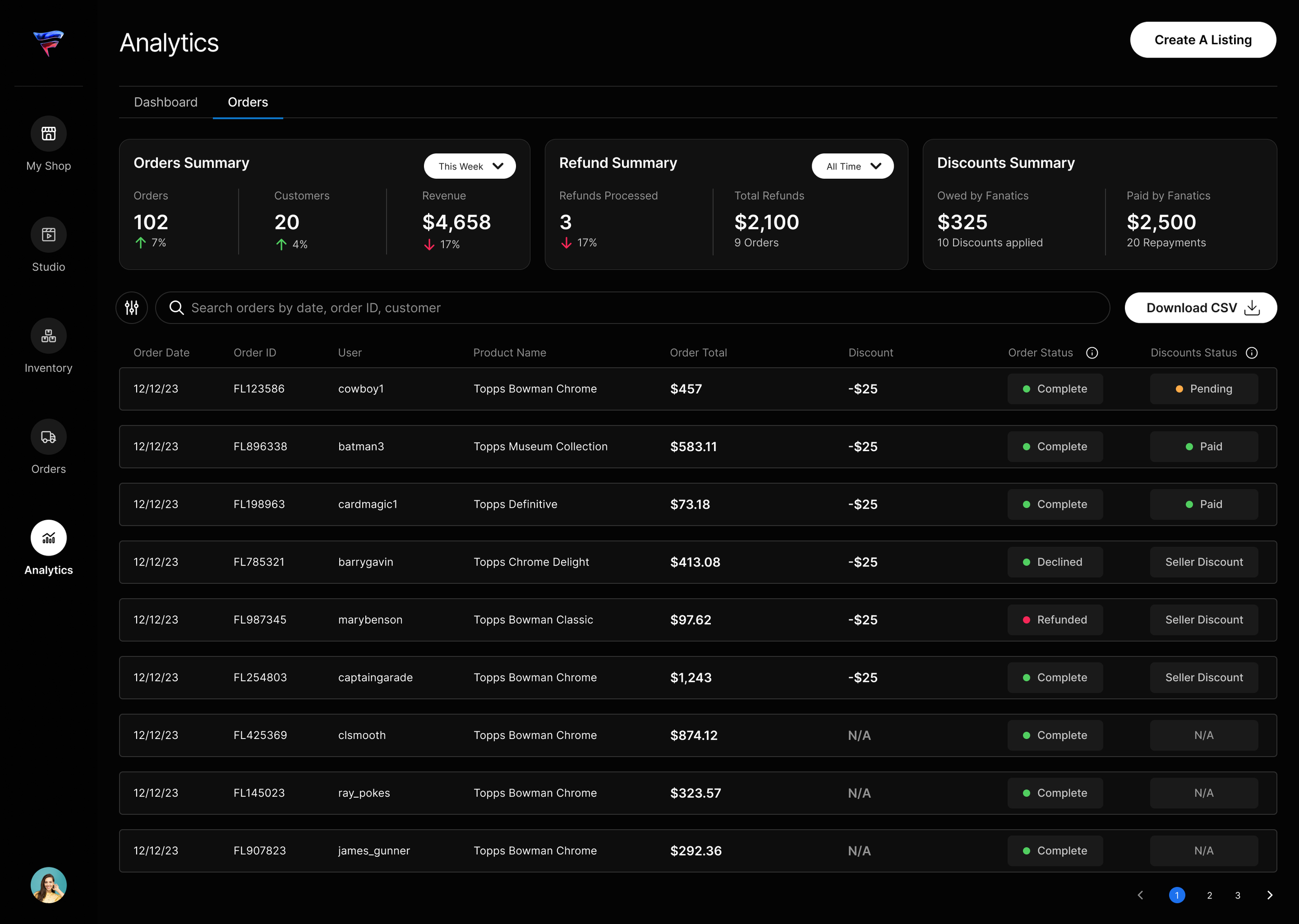
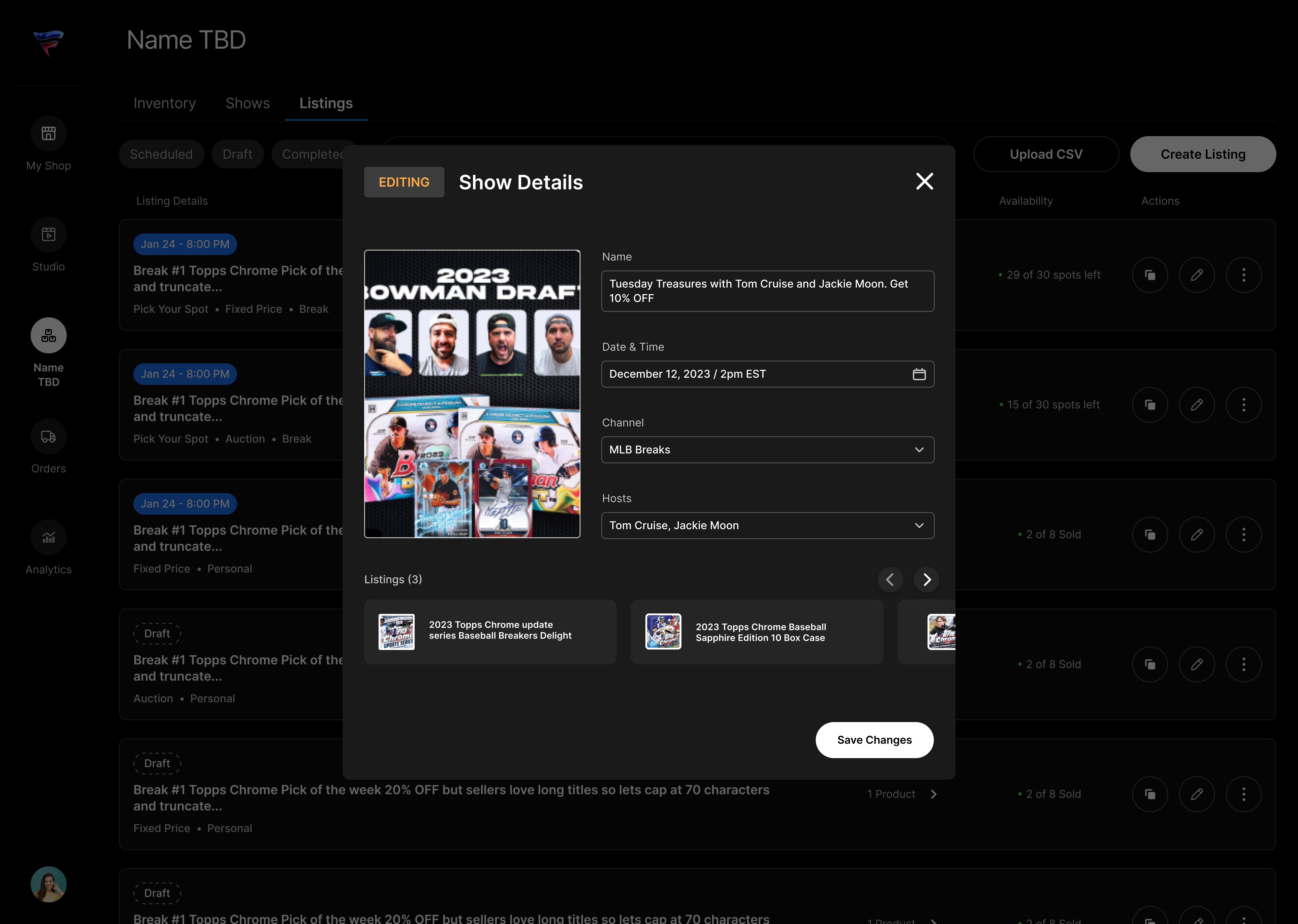
Needed simple controls, visibility into viewers and bids, and fast access to tools while live.
Business
Required fast navigation, stable live experiences, and scalable patterns that could grow with the platform.
Core Experience Decisions
Key decisions that shaped the product architecture:
Navigation and Filters
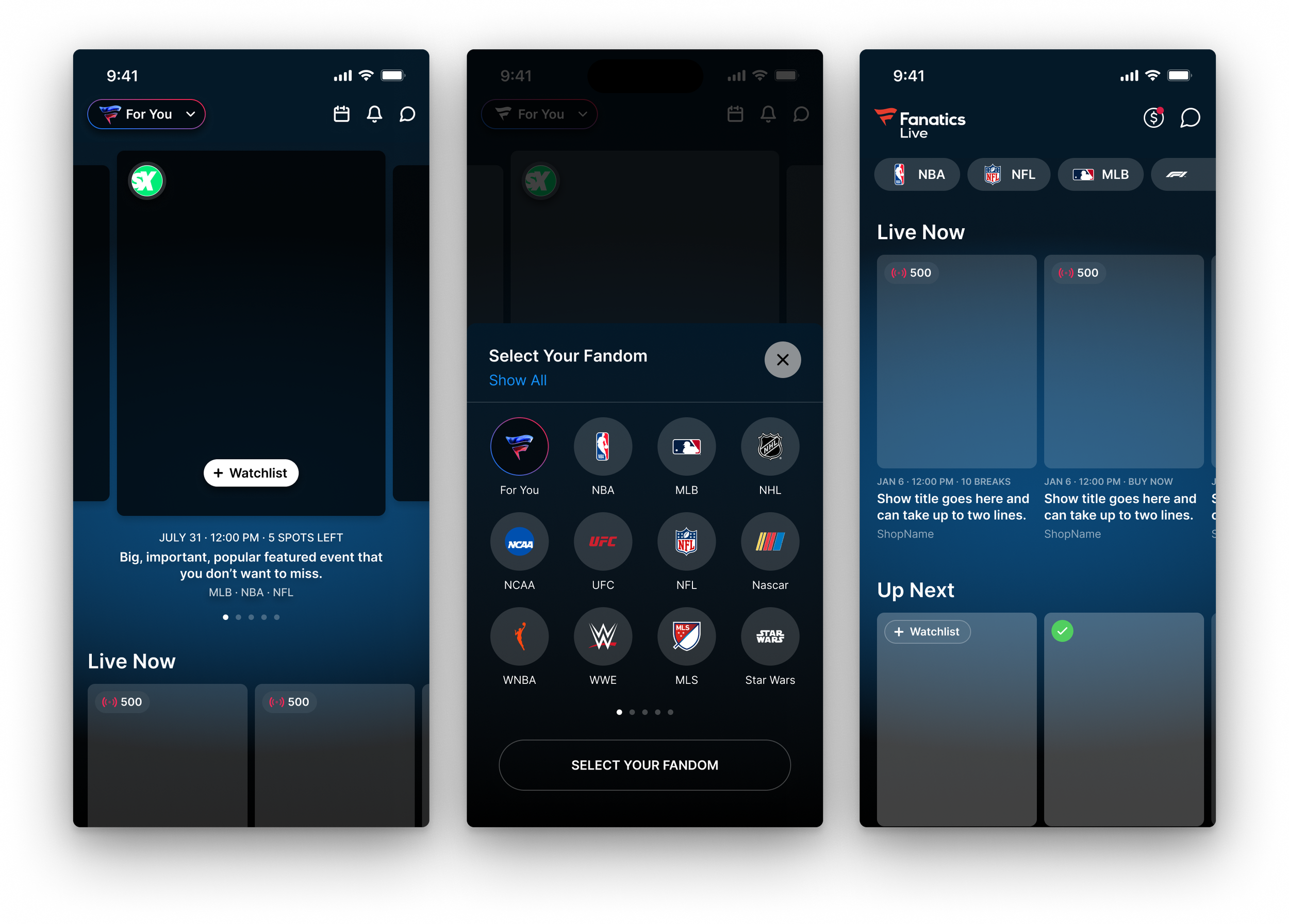
Top-level filters prioritized shows, sports, and collector preferences to reduce time to discovery.
Event and Show Cards
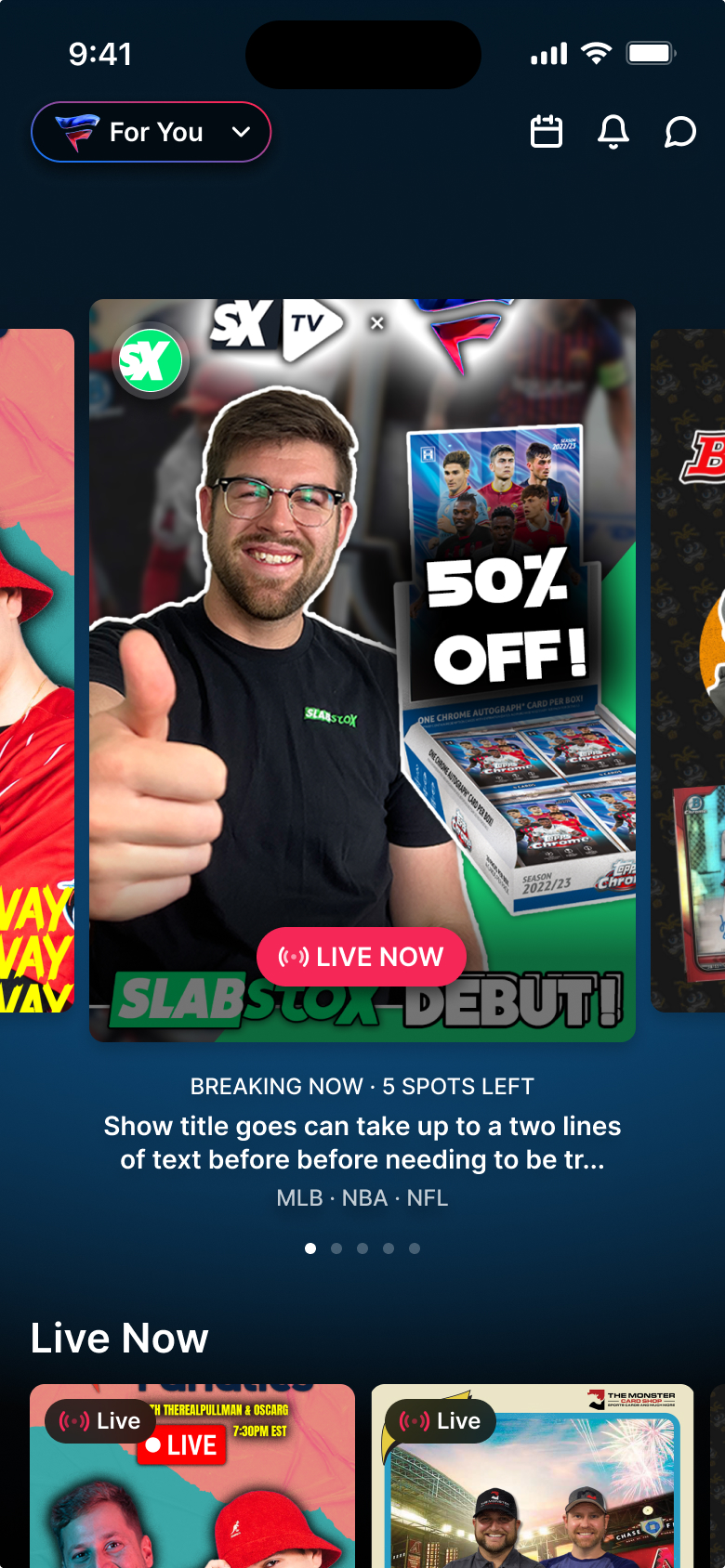
Multiple card layouts were explored to balance information density and scannability, including hero cards and 2x2 grids.
Metadata Hierarchy
Key details such as show status, seller, sport, break type, and timing were surfaced without overwhelming users.
Disagree and Commit
One proposed concept introduced live discussion topics to keep users engaged before and after auctions. Although there was strong interest across product and engineering, I authored a PRFAQ to evaluate feasibility and impact. Ultimately, we agreed to defer the idea and focus on launch-critical features, protecting speed and execution quality.
Outcome
After refining navigation and metadata clarity, a full prototype was tested through an A/B test with 67 collectors from the pre-launch waitlist. The results validated the core design decisions: Conversion from show feed to live shows reached 86.4 percent. The app generated over $30 million in GMV within the first four months. The iOS app achieved a five-star rating with consistent week-over-week user growth.
What This Demonstrates
Designing under extreme ambiguity and time pressure. Rapid domain learning in niche marketplaces. Balancing live interaction, commerce, and usability. Leading structure, vision, and execution from zero.
Why This Matters
As live commerce continues to grow, the differentiator will not be access to inventory. It will be speed, trust, and clarity in real-time experiences. This project demonstrates how focused design decisions can unlock engagement and revenue in high-intent, live marketplaces.
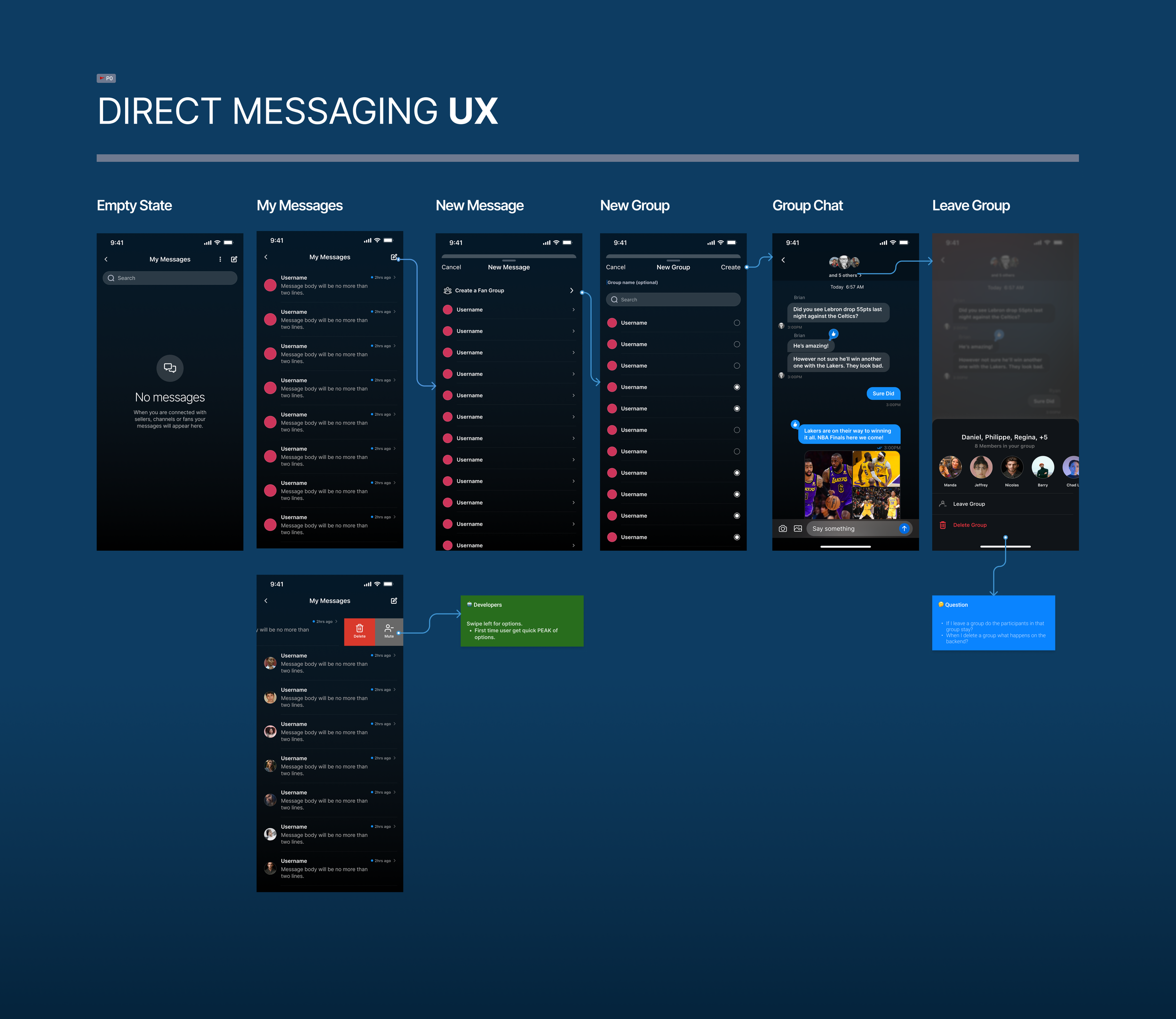
UX Artifacts
Experience it live