Case Study2024 • VisionOS
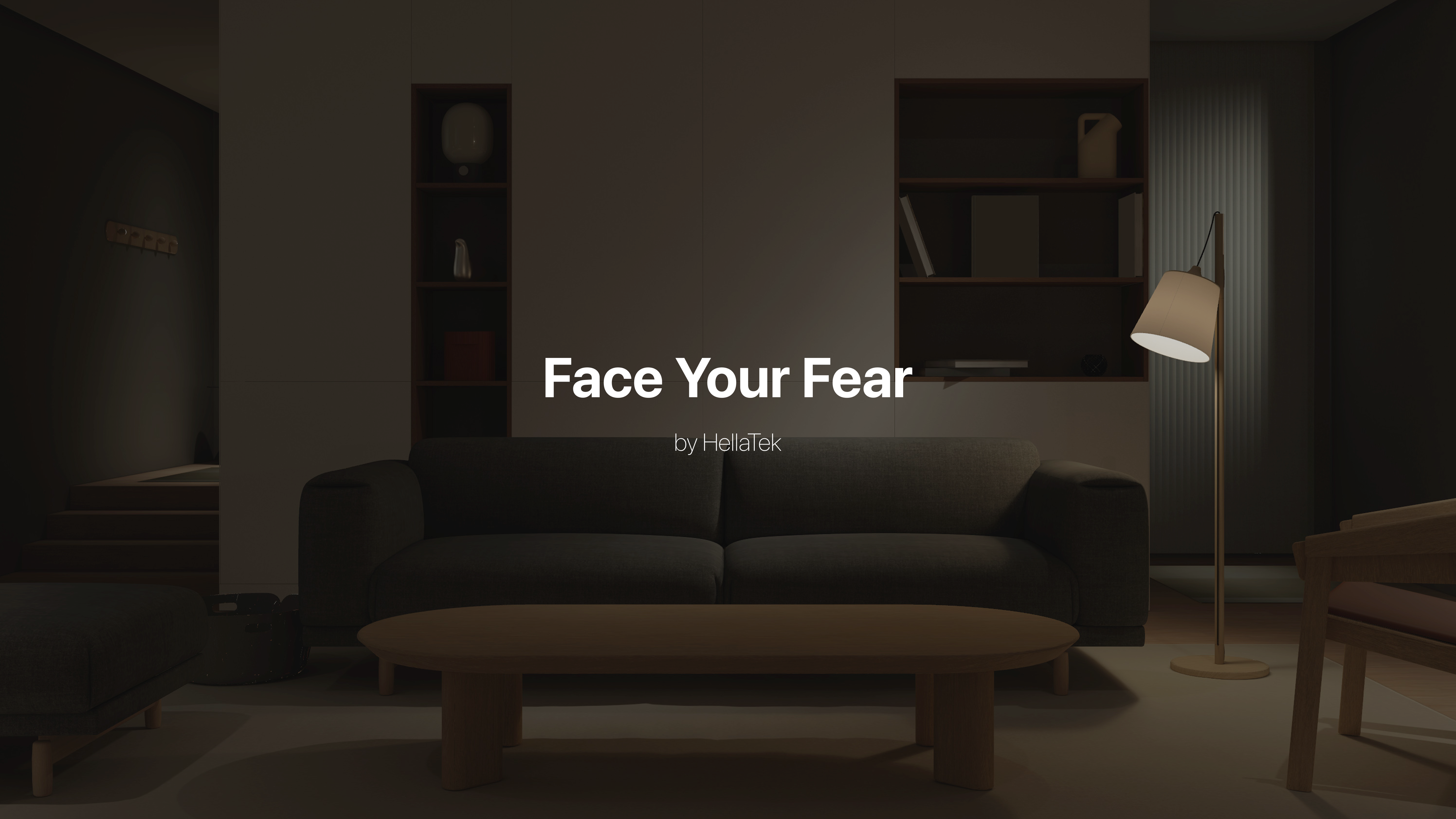
Face Your Fears
Founder and Product Designer
The Brief
Immersive Exposure Through Play, Not Therapy. Designing calm, controlled XR experiences for fear regulation.
Context
Fear and anxiety are universal, but access to effective exposure-based tools is limited. Traditional exposure therapy is often clinical, intimidating, expensive, and difficult to access. At the same time, most wellness apps stop at reflection or breathing exercises, avoiding direct confrontation with fear altogether. Face Your Fears was created as an immersive XR concept that lives between wellness, gaming, and self-directed exposure. Rather than positioning itself as therapy or treatment, the product reframes exposure as short, game-like experiences that help users practice staying regulated while uncomfortable.
Core Challenges
Key obstacles that required strategic design thinking to overcome.
01
Avoiding Clinical Friction — Clinical framing increases intimidation and drop-off
02
Preventing Overwhelm — Exposure must be gradual, controlled, and reversible
03
Maintaining Engagement Under Stress — Fear can cause freezing or dissociation if users become passive
04
Measuring Progress Without Gamifying Bravery — Progress should reward regulation, not spectacle
Goal
Design an immersive XR experience that helps users confront real fears through progressive exposure while remaining calm, safe, and in control. Success meant users could voluntarily stay present with discomfort, build confidence over time, and return to practice without feeling pressured or judged.
Role
Founder and Product Designer responsible for concept development, interaction design, progression systems, onboarding strategy, UX writing, and MVP scope definition.
Users
Primary users include adults interested in self-improvement, wellness, or personal growth who experience common fears such as heights, spiders, or enclosed spaces. Many users are curious about exposure but hesitant to engage with clinical therapy or high-intensity VR experiences.
Key Insight
Fear is reduced through regulation, not avoidance. Practice staying calm while uncomfortable, and fear loses authority.
Solution Overview
Face Your Fears is an immersive XR app where users select a fear and enter a controlled virtual environment. Each experience is designed around progressive exposure, increasing intensity gradually while keeping users active and grounded. The product avoids shock, spectacle, or jump scares. Instead, it emphasizes presence, repetition, and voluntary engagement as the mechanism for nervous system retraining.
Design Principles
Control beats courage. Engagement prevents dissociation. Progress is earned through calm, not speed. Short sessions encourage return behavior.
Core Experience Flow
A structured journey tailored to user comfort:
Lightweight Onboarding
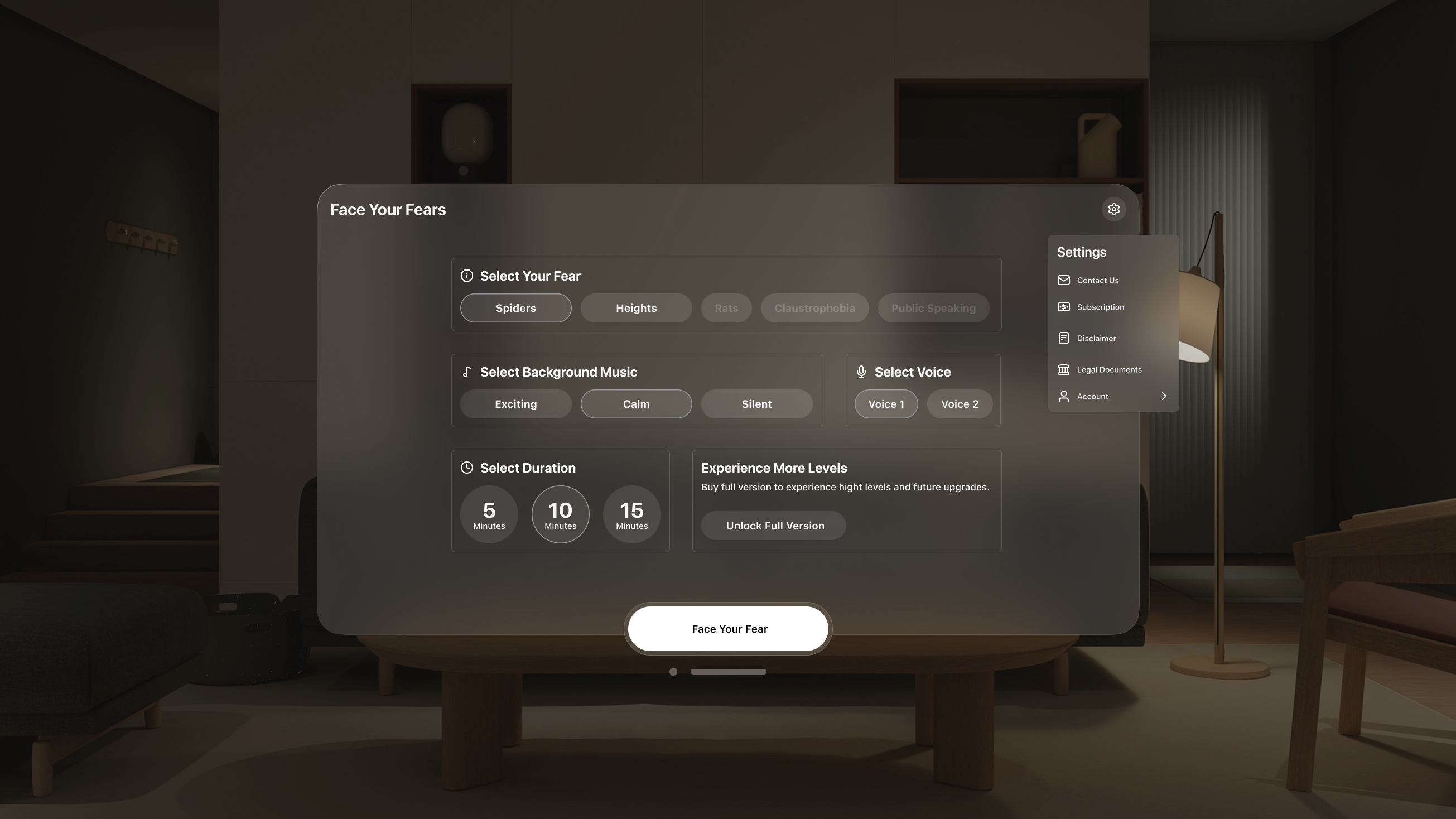
Users sign in with Apple. Name is auto-filled and age is collected. No lengthy assessments or diagnostics.
Fear Selection
Users choose a fear category such as spiders or heights.
Progressive Exposure
Users enter an immersive environment where intensity increases gradually across levels.
Active Engagement
Users must interact physically with the environment to prevent freezing or avoidance.
Regulation-Based Progress
Progress is measured by time spent calmly in the experience, similar to meditation minutes.
Example: Spider Experience
The spider experience begins with one to three spiders crawling nearby. Users must physically pick them up and place them into a box. After completing the first wave, additional spiders appear with increased density and proximity. The task remains the same, but intensity escalates gradually. This structure keeps users engaged, embodied, and present, using interaction as a grounding mechanism rather than a distraction.
Progress and Safety Systems
A panic button is always accessible, allowing users to exit immediately. Milestones are earned by remaining in an experience calmly for a set duration. For example, staying in level one for five minutes without exiting counts as a milestone. The system rewards nervous system regulation, not endurance or bravado.
MVP Scope and Monetization
Face Your Fears was designed as a focused 90-day MVP. Users receive a three-day trial allowing access to two fears across two difficulty levels. This establishes value while maintaining clear boundaries. The scope prioritizes depth of experience over breadth of content.
Outcome
Face Your Fears demonstrates how XR can be used responsibly to support emotional regulation and personal growth. The experience reframes fear practice as approachable, repeatable, and self-directed rather than clinical or intimidating.
What This Demonstrates
Designing XR-native interaction systems. Applying behavioral psychology through UX. Building safe, trust-centered experiences. Framing sensitive problems without clinical overhead.
Why This Matters
Fear is not something to eliminate. It is something to train. Face Your Fears shows how immersive technology can help users build transferable emotional resilience by practicing regulation in controlled, meaningful environments.
Future Evolution
Adaptive difficulty informed by biometric or behavioral signals. Longitudinal progress visualization showing fear decay over time. Expanded fear categories with consistent progression logic.
UX Artifacts



Experience it live