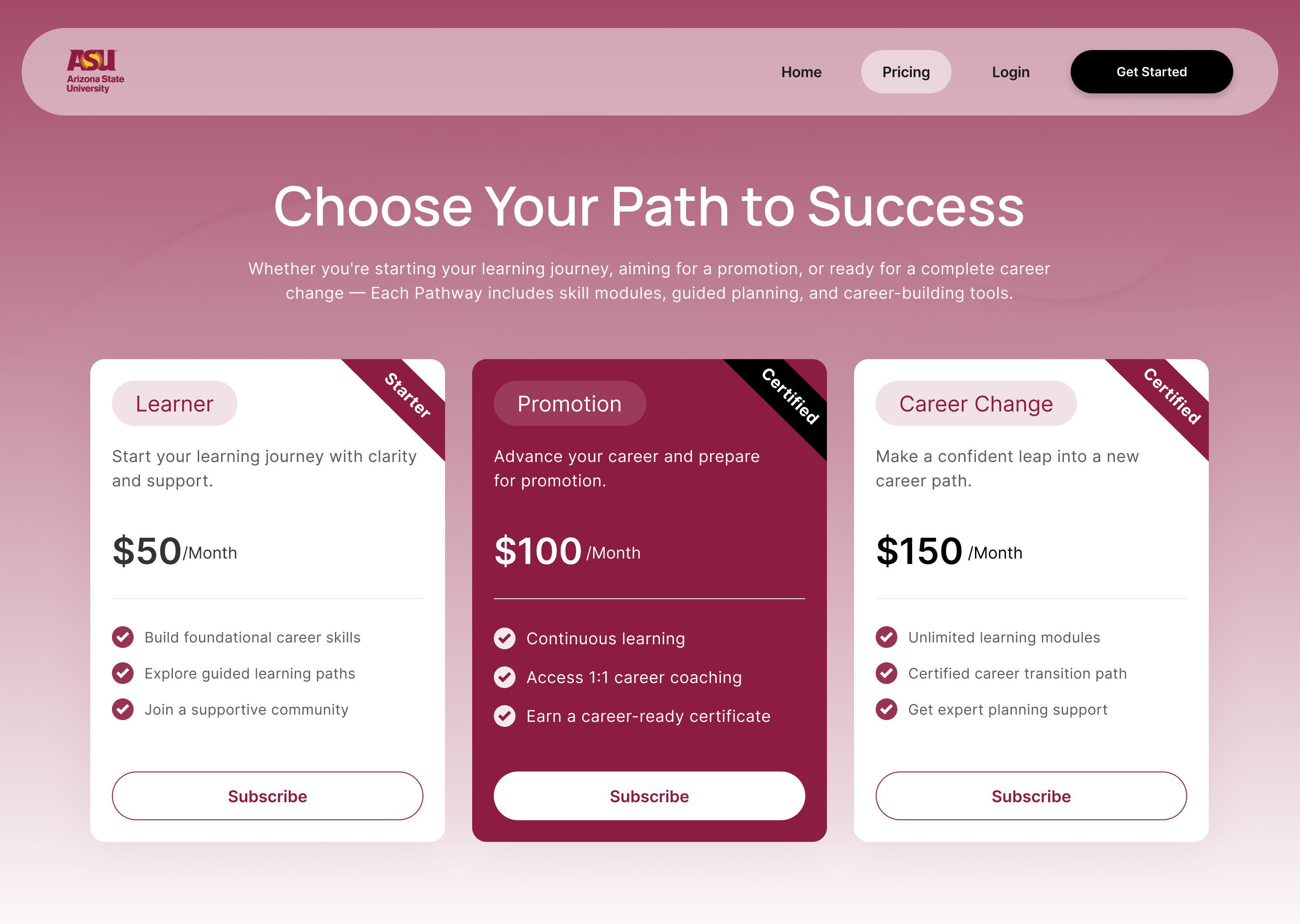
Case Study2025 • Web, Mobile
Arizona State University
Lead AI Product Designer
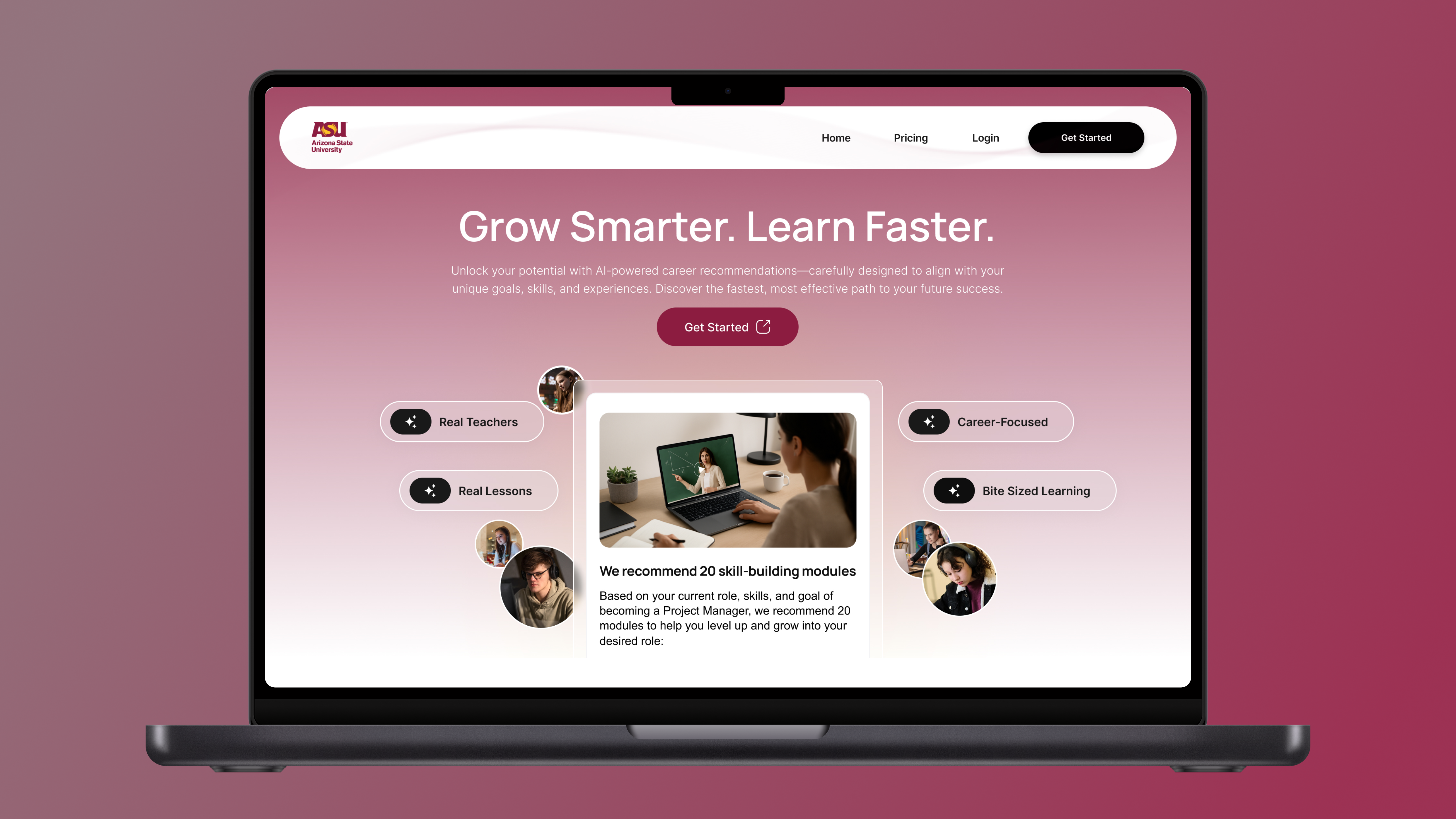
The Brief
AI-Powered Personalized, Modular Learning Pathways. Designing trust, relevance, and clarity in AI-driven education.
Context
Working adults want to upskill, pivot careers, or stay relevant without committing to long, expensive degree programs. Traditional higher education structures are optimized for full courses and credentials, not targeted learning needs. ASU holds an enormous library of high-quality academic content, but it is locked inside rigid course structures. The challenge is not content creation. It is relevance, personalization, and delivery at the right level of granularity.
Core Challenges
Key obstacles that required strategic design thinking to overcome.
01
Relevance at Scale — Learners need content that aligns to their goals, not generic curricula.
02
Trust in AI Recommendations — Users want to understand why content is suggested and trust it will move them forward.
03
Cognitive Overload — Too many options, modules, or paths quickly overwhelm busy adults.
04
Institutional Constraints — Existing LMS content is inconsistently structured and difficult to repurpose.
Goal
Design a personalized learning experience that transforms existing course content into targeted, modular learning pathways. Success meant learners could quickly understand what to learn next, why it mattered, and how it connected to real outcomes without committing to a full course or degree.
Users
Primary users include working adults exploring career advancement, career switchers seeking targeted skills, and lifelong learners engaging with ASU outside traditional degree programs. Key constraints include limited time, skepticism toward AI-driven education, and a strong need for credibility and outcome alignment.
Key Insight
Learners do not want more content. They want the right content. AI should not replace education. It should act as a thoughtful guide through it.
Solution Overview
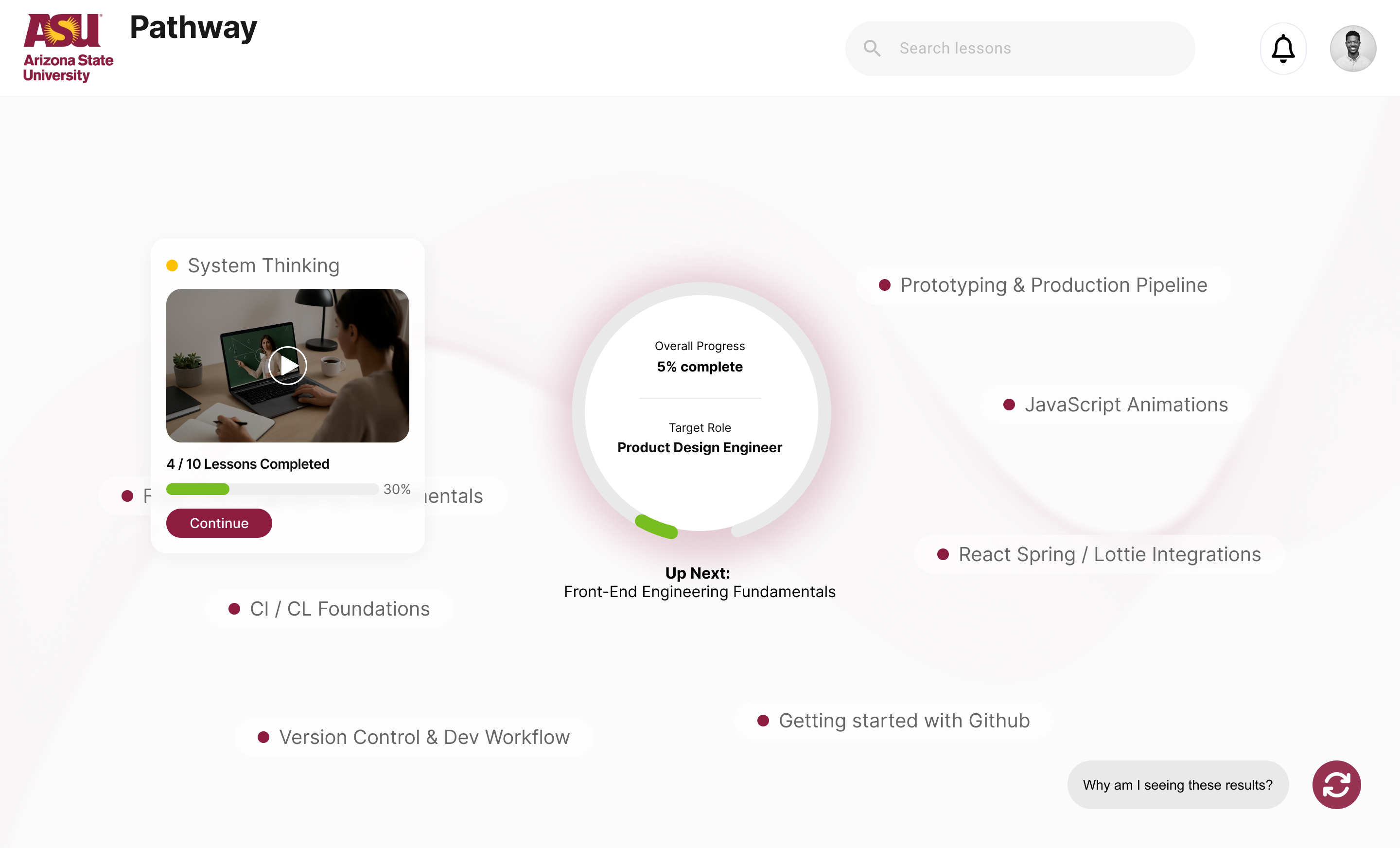
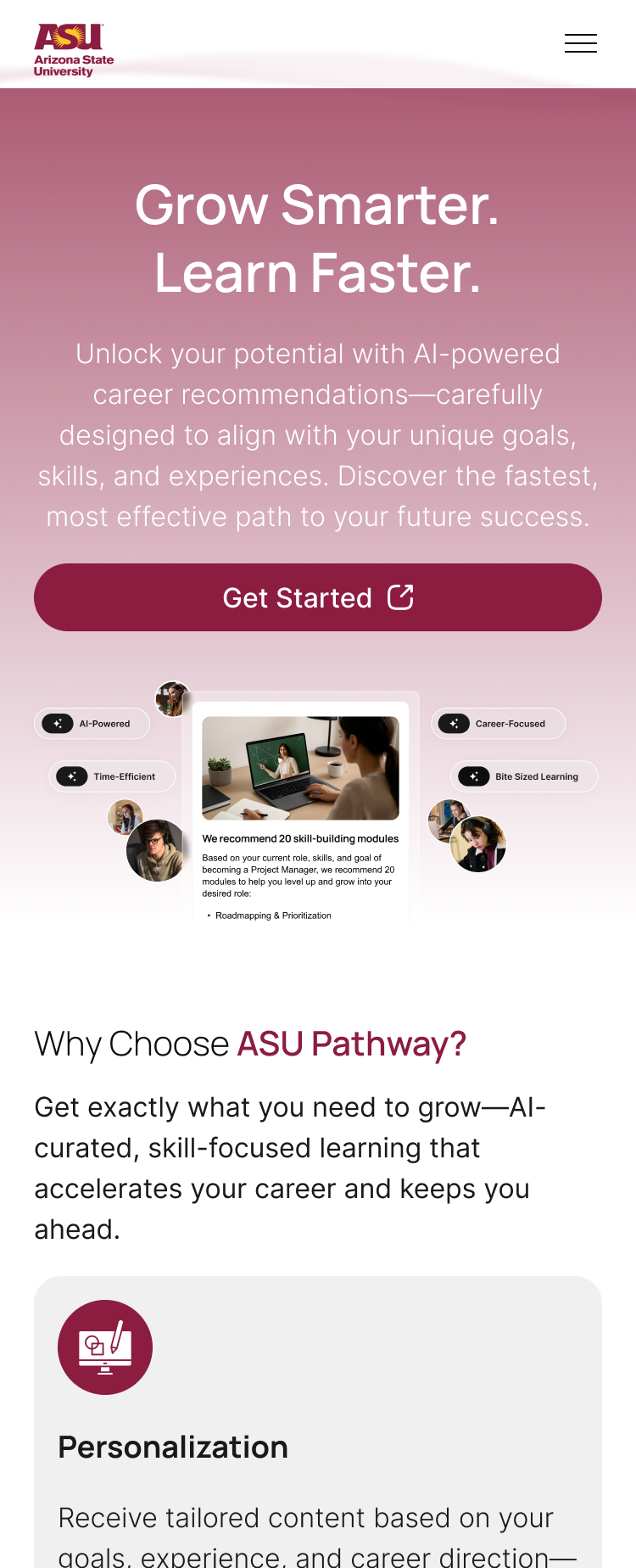
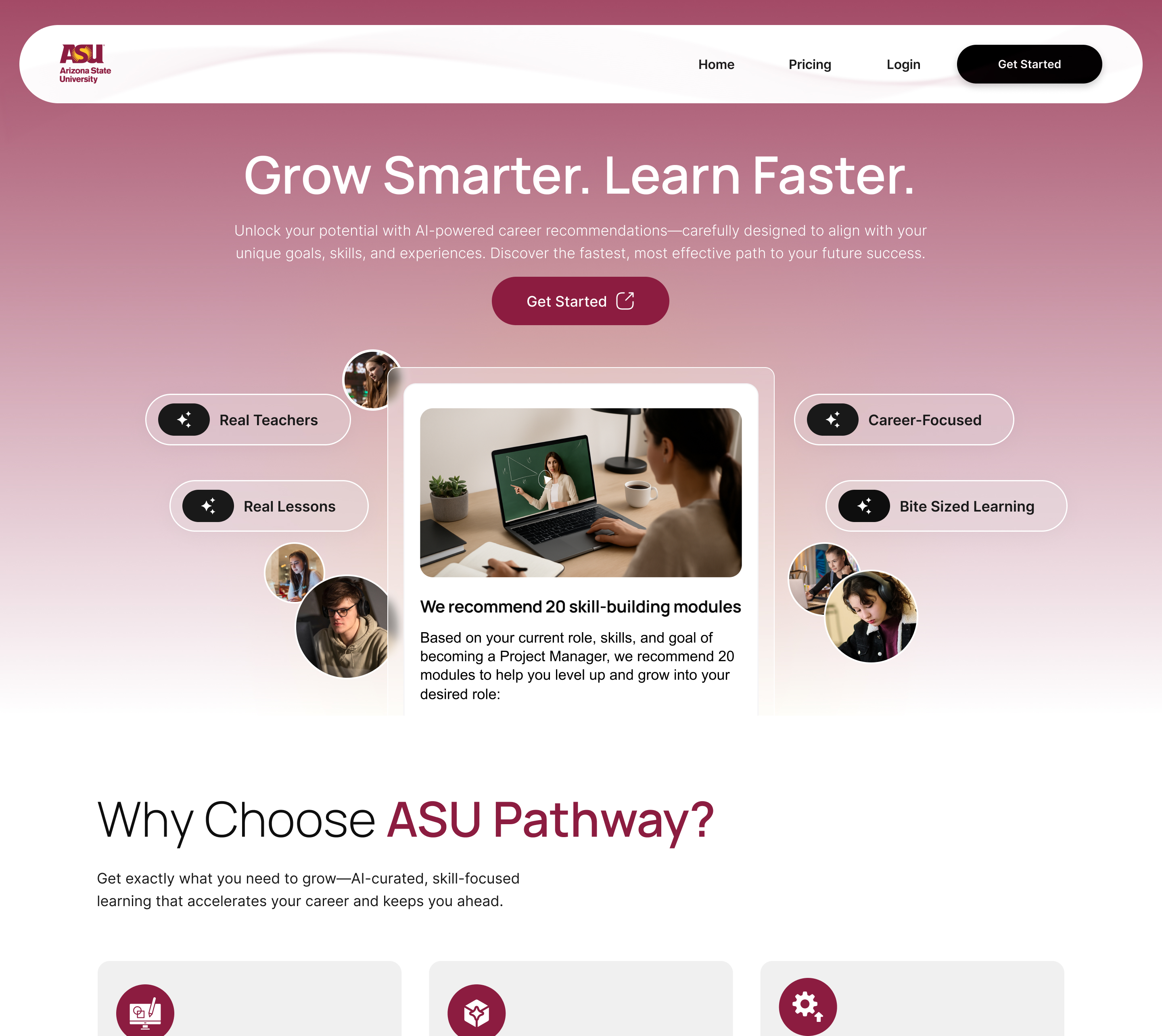
The ASU Personalized Learning Pathway Tool is an AI-assisted system that assembles small learning modules into coherent pathways based on a learner’s goals, background, and progress. Instead of enrolling in full courses, learners receive a continuously adapting path made up of focused learning objects sourced from existing ASU content. The system supports ASU’s long-term “ASU for Life” strategy while unlocking new ways to engage learners outside traditional academic structures.
Design Principles
AI earns trust through clarity, not magic. Relevance beats completeness. Progress must feel visible and motivating. Academic credibility comes before novelty.
Challenges and Tradeoffs
Two key challenges required careful design solutions:
Trust in AI Recommendations
Recommendations are paired with clear explanations, learning outcomes, and visible progress so learners understand why each step exists.
Avoiding Over-Engineering
Rather than building a complex knowledge graph, the MVP focused on modular tagging and embeddings to balance speed and scalability.
Outcome
The concept reframes ASU’s role from course provider to lifelong learning partner. By shifting from fixed curricula to adaptive pathways, the experience reduces learner friction, increases perceived relevance, and creates a scalable foundation for future personalization and modular monetization.
Core Experience Flow
The product experience flows through five key stages:
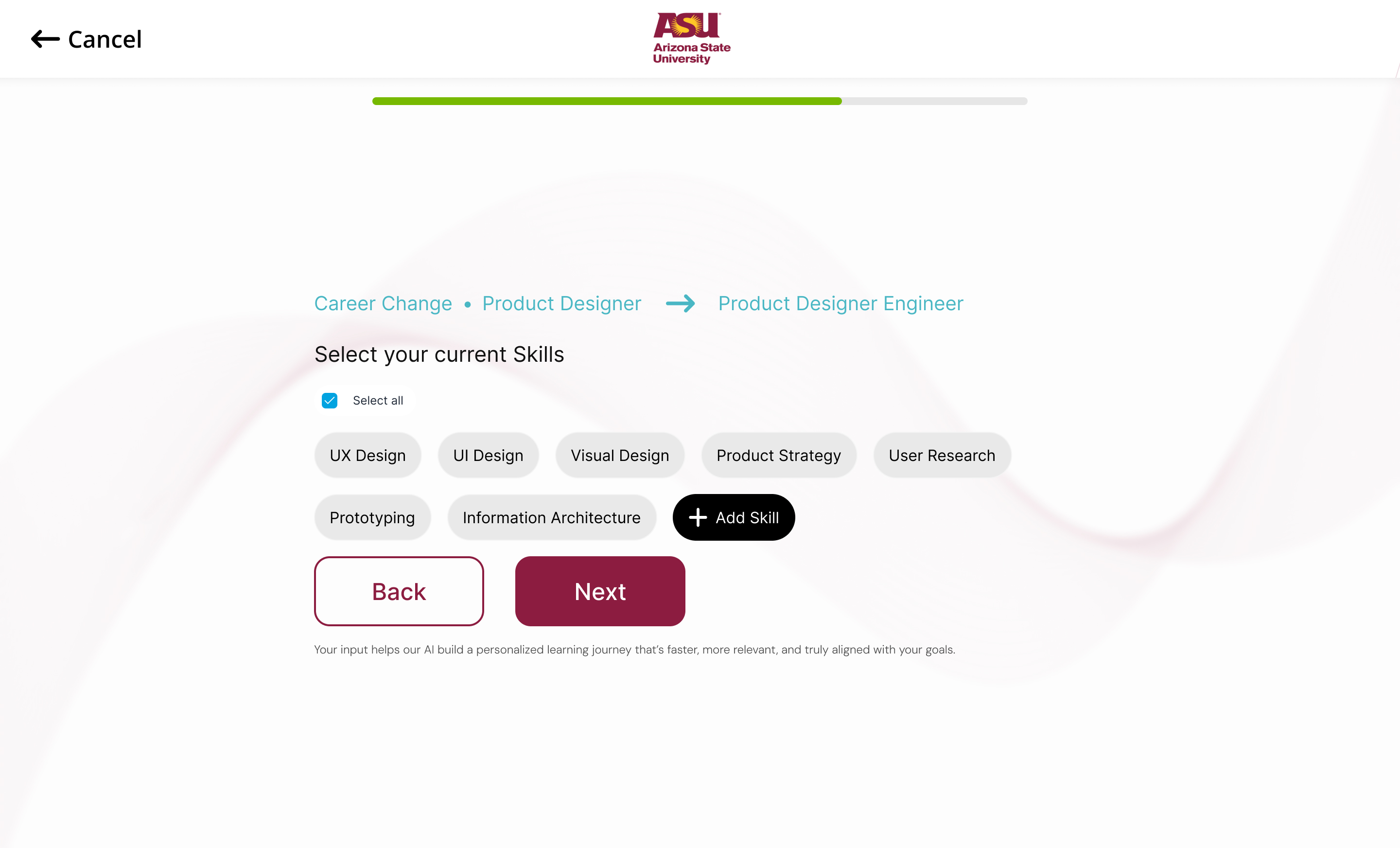
1. Goal-Based Onboarding
Learners define goals, skills, and interests. Optional resume or LinkedIn input adds context without creating friction.
2. Learner Profile
A living profile evolves as learners engage with content, informing future recommendations.
3. AI Pathway Assembly
The system assembles a personalized learning path using modular content instead of full courses.
4. Modular Learning
Learners complete short, focused modules with clear outcomes and time expectations.
5. Continuous Adaptation
Progress and feedback update the pathway, surfacing the next best learning step.
What This Demonstrates
Designing AI-assisted education experiences grounded in trust. Balancing personalization with institutional constraints. Thinking in systems across content, data, and UX. Designing for credibility, not hype. Translating complex academic assets into human-centered products.
Why This Matters
As higher education shifts toward lifelong learning, the challenge is no longer access to content. It is relevance, clarity, and sustained engagement. This project demonstrates how AI can responsibly support learning by reducing noise, respecting learner intent, and aligning education with real-world outcomes.
UX Artifacts